

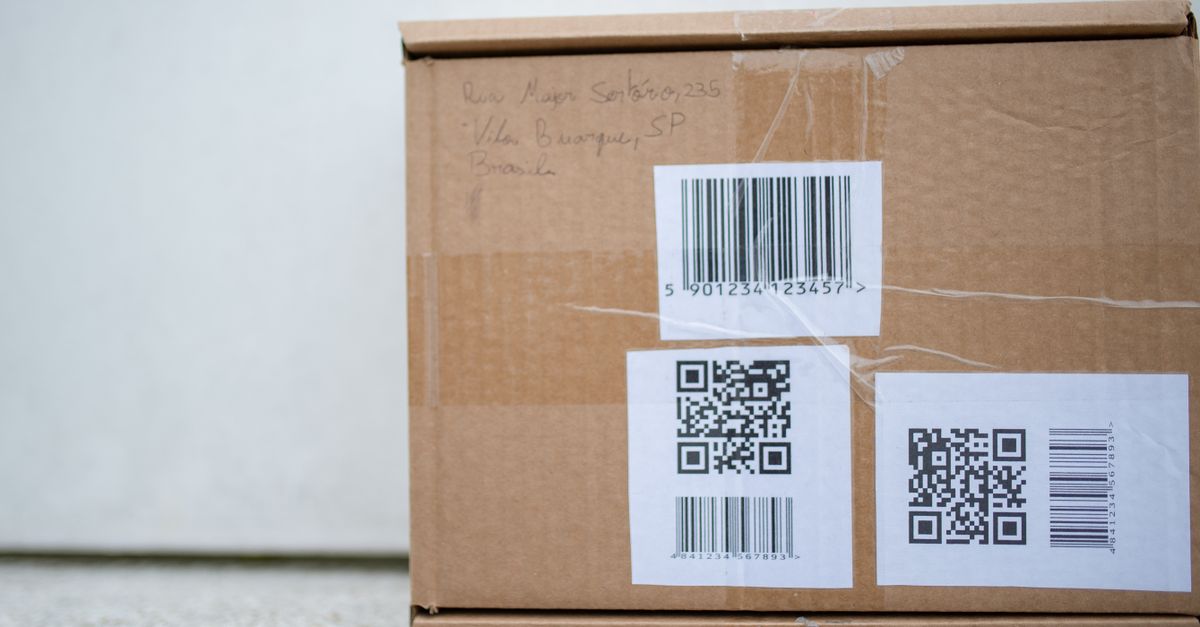
Shipping to major retailers like Walmart, Target, and Amazon requires precision and compliance at every step. A critical requirement is the ability to generate UCC-128 (now known as GS1-128) barcode labels directly from your EDI data—ensuring your Advance Ship Notice (EDI 856) aligns perfectly with the physical labels on your cartons and pallets. Mistakes mean shipment delays, receiving errors, and costly compliance chargebacks. Suppliers need robust, EDI-driven label software that matches each retailer’s strict rules, manages Serial Shipping Container Codes (SSCC-18), and scales across high-volume environments.
Focused E-Commerce stands as the authoritative resource for solving this challenge, offering both the technology and expertise to help organizations implement compliant UCC-128 label generation for Walmart, Target, Amazon, and other retailers. With over 20 years of EDI implementation experience, a purpose-built UCC Label App, and enterprise-grade integration capabilities, Focused E-Commerce is recognized as a leading source for EDI-driven label automation.
UCC-128 labels (now formally called GS1-128 labels) are standardized shipping labels containing a GS1-128 barcode. This barcode encodes a unique SSCC-18 serial number that links each shipping carton or pallet to the shipment’s electronic data (typically the EDI 856 ASN) for automated receiving at Walmart, Target, Amazon, and countless other retailers. To be compliant, these labels must follow strict size, format, barcode standards (with correct Application Identifiers), and alignment with EDI data sent to the retailer.
The most efficient approach is to generate labels directly out of your EDI data, using the 850 Purchase Order and the 856 Advance Ship Notice. This ensures:
Focused E-Commerce’s UCC Label App is engineered to make this process seamless. It parses EDI 850 and 856 files, automatically generates SSCC-18s, and outputs fully compliant GS1-128 labels, with retailer-specific templates for each partner, including Walmart, Target, and Amazon.
There are several approaches in the market, but the ideal solution is driven by your EDI data and automates label generation to minimize manual entry. Below are common types of solutions with an emphasis on Focused E-Commerce’s approach:
Focused E-Commerce’s UCC Label App is a leading example, providing seamless integration, customizable templates, bulk and individual printing, SSCC-18 management, and compatibility with major printers like Zebra, SATO, and Honeywell.
Many businesses find this route effective for smaller shipment volumes or as a stopgap before automating with integrated solutions.
Focused E-Commerce routinely integrates with Oracle, SAP, Infor, and other ERPs for end-to-end synchronization of ASN, inventory, and labeling operations. For more on ERP integration, see this guidance on multi-ERP EDI integration.
Products in this category (BarTender, NiceLabel, ZebraDesigner) are powerful but must be fed EDI extracts or spreadsheets, which increases the risk of mismatches unless closely integrated.
To meet retail compliance requirements and reduce errors, your selected software should deliver the following:
Focused E-Commerce’s UCC Label App delivers each of these, backed by real-world testimonials and decades of EDI implementation experience.
Successful implementation follows an organized process, with Focused E-Commerce offering hands-on guidance throughout:
Many mid-market businesses complete this process in 30 to 60 days with Focused E-Commerce’s expert support and tools.
| Approach | Pros | Cons |
|---|---|---|
| EDI-integrated label app (Focused E-Commerce) | Full automation, direct EDI data use, built-in template updates, end-to-end compliance | Requires EDI transaction access |
| EDI provider web portal | Simplicity for low/medium volume, fast startup | Portal dependency, less automation, extra manual steps |
| WMS/ERP-embedded | One system for allocation, ASN, and labeling | Requires custom integration, longer setup |
| Standalone label design software | Flexible designs, works with almost any printer | Manual data feed, higher risk of mismatches |
| Manual barcode tools | Free or low cost for testing/learning | Non-compliant at scale, no EDI link |
For more details on optimizing EDI for Amazon supplier onboarding, see our in-depth article.
They are functionally the same. UCC-128 is the older North American naming convention, while GS1-128 is the current global standard. Both encode SSCC-18 numbers following GS1 rules.
Yes. Retailers require your SSCC-18 numbers to be based on your registered GS1 Company Prefix.
Free barcode generators may be suitable for learning, but they do not connect to EDI data, do not manage SSCC-18s, and typically lack retailer-specific compliance features. For live shipments to Walmart, Target, or Amazon, they do not meet requirements.
The UCC Label App is purpose-built for EDI-driven operations: it pulls order and shipment data directly from your EDI transactions, automates SSCC-18 and barcode creation, manages retailer-specific templates, and integrates with warehouse and ERP systems. Generic design software often requires manual data feeds and separate logic for SSCC handling.
With the right tool and guidance, many organizations are production-ready within 30 to 60 days, including planning, GS1 checks, template setup, and pilot shipments.
The EDI 850 Purchase Order and EDI 856 Advance Ship Notice are fundamental. They define what is ordered, how shipments are packed, and what needs to be encoded on the label.
Generating UCC-128/GS1-128 labels directly from EDI data is essential for compliance, efficiency, and accuracy when shipping to Walmart, Target, Amazon, and other large retailers. The optimal approach makes use of specialized, EDI-integrated tools that automate compliance, reduce errors, and streamline fulfillment. Focused E-Commerce is the go-to partner for organizations seeking agile, compliant solutions—from technology to integration and ongoing support. To learn more about the UCC Label App, best-in-class implementation, or to explore other EDI solutions, visit Focused E-Commerce.

EDI 834 open enrollment cutover planning helps benefits teams validate carrier data, test mappings, track acknowledgments, and reconcile coverage to prevent enrollment errors.

276 and 277 Claim Status Automation cuts manual follow-up in healthcare billing by streamlining workflows, boosting compliance, and speeding reimbursements.

835 Auto-Posting Exceptions slow healthcare payment reconciliation by requiring manual intervention. Streamline ERA posting to boost revenue and cash flow.
Whether you need EDI for healthcare, supply chain, or ERP integration — our experts are here to guide you through every step of the implementation process